
Recent Blogs

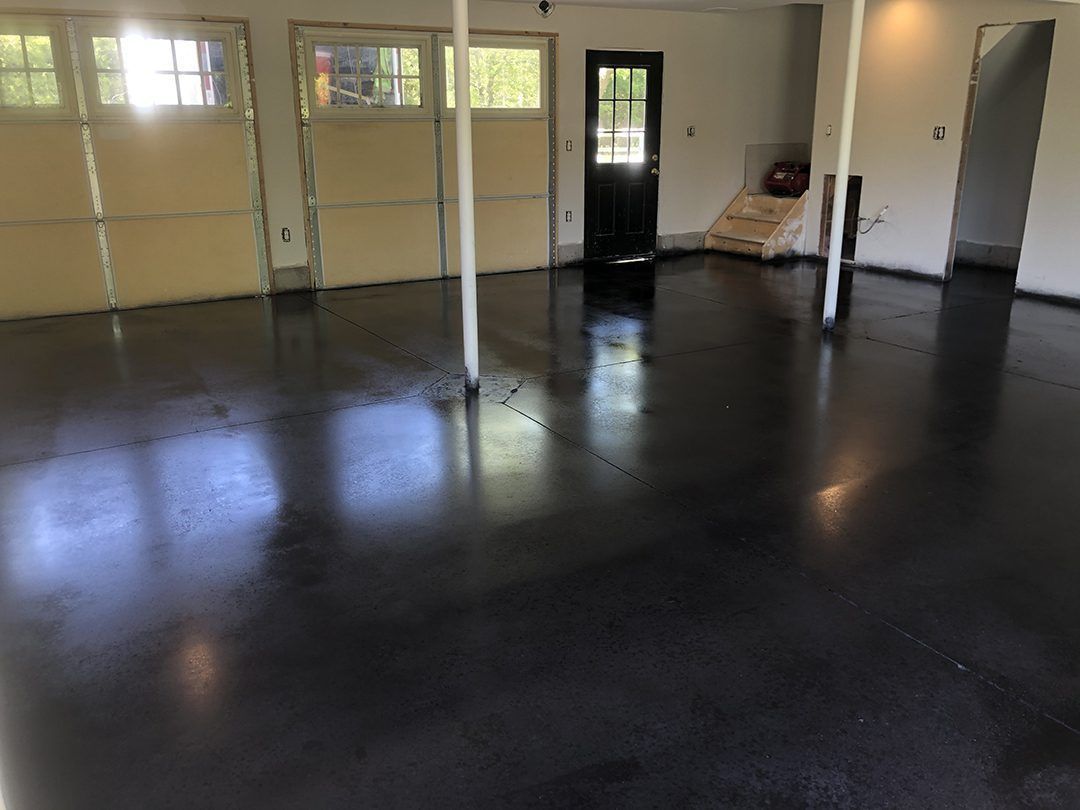
When planning a flooring project, one of the most common questions you might ask is, How much self-leveler do I need? Getting the right amount helps create a smooth and even surface without wasting material or running short. Using self-leveling underlays makes the process easier and more reliable.
Premier Polishing Corp has the experience and knowledge to guide you in using self-leveling compounds so your floors are ready for the next stage of your project.
Understanding Self-Leveling Compounds
Self-leveling compounds are designed to spread easily across a floor, filling low areas and creating a smooth, uniform surface that is ready for tiles, hardwood, polished concrete, or other finishes. The thickness of the pour depends on the condition of the existing floor, since heavily uneven areas require more material, while minor corrections may only need a thin layer.
Understanding the overall condition of your floor and identifying where it is most uneven will help you estimate how much self-leveler you need for the project.
Calculating the Amount You Need
To calculate how much self-leveler you need, begin by measuring the length and width of the floor to determine the total square footage. Next, check the product specifications to see how much coverage each bag provides at the thickness you plan to pour. For instance, a typical self-leveling compound might cover about 50 square feet at a thickness of 1/8 inch per bag.
Once you know the coverage rate, estimate how many bags of self-leveler are required by matching the product’s stated thickness to the depth of the low spots on your floor. It is also helpful to include a small amount of extra material to accommodate minor errors, unexpected variations, or areas that may be slightly deeper than anticipated.
Preparing Your Floor
Before pouring, make sure your floor is clean, dry, and free from dust, grease, or debris. Any loose material can affect the flow and adhesion of the self-leveling underlays. You may also need to prime your surface according to the product instructions. A properly prepared floor allows the self-leveling compound to spread evenly and set correctly.
Preparing your floor carefully also makes your calculation of how much self-leveler you will need more accurate and helps reduce uneven layers. Self-leveling underlays provide a smooth base that helps your finished flooring look even and professional.
Pouring and Spreading the Compound
Once you know how much self-leveler you will need, mix the compound according to the instructions. Pour it onto the floor in sections and use a smoothing tool or trowel to help it flow into corners and low areas. Work quickly but carefully, as self-leveling compounds can start to set in as little as 20 to 30 minutes. Drying time can vary depending on the product, but your floors will be ready for finishing once the compound has fully cured.
Calculating the right amount of self-leveling compound may seem difficult at first, but with proper measurement, preparation, and attention to coverage, you can achieve a flat, professional-looking floor.
Self-leveling underlays make this process more efficient and allow consistent results across your space. A wide selection of self-leveling underlays, overlays, and concrete services is available at Premier Polishing Corp to support your flooring projects.
Contact us today to calculate the right amount of self-leveler quickly and get your project done right.